
Why Does Paint Crack on Trim? The Causes I See Most Often
Because trim and the joints around it keep moving while hard paint and old caulk cannot, and brittle old layers, thick coats, moisture and sun make it worse. Where the crack sits points to the cause. In short, the fix runs in order: cut out failed caulk, remove loose paint, prime bare spots, re-caulk the joint, then thin coats.
Why does paint crack on trim in some spots and not others? The location answers it. A crack along the wall joint is movement and caulk, a fine web across the face is thick or hard layers and sun, and lifting flakes mean moisture or poor grip.
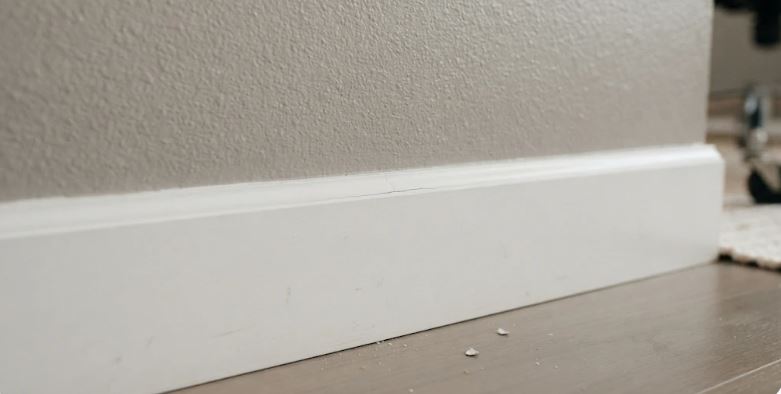
Paint cracking where trim meets wall
A crack right along the joint usually means movement. Wood and drywall swell and shrink at different rates with humidity and temperature, and in North Texas the clay soil under a house adds seasonal movement on top of that.
Paint and hard caulk cannot stretch across the gap, so the film splits along the joint. Sun makes the same joints move more on exterior trim, which is why south and west sides tire first.
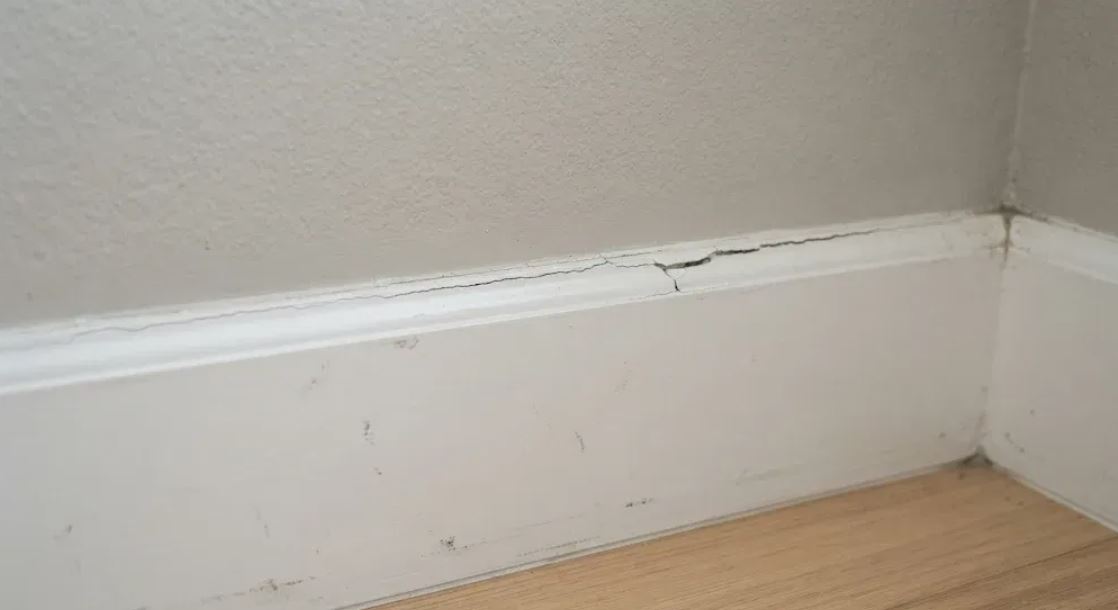
I saw this plainly in a Little Elm home built in the 2010s, where in February 2026, hairline cracks ran along the top edge of the baseboards, with a split line of hard caulk in places. The trim felt solid when I pressed it, but the joint at the wall had opened a little.
Should you caulk trim before painting?
Yes, we caulk trim before painting for gaps along the wall joint, and with a flexible paintable caulk, not a hard one. Too much caulk, or a hard one, cracks again because it cannot follow the movement. My order on every joint:
- Cut out the failed caulk first, so the new bead bonds to clean surfaces.
- Prime the bare spots.
- Caulk the joint, smoothing the bead thin so it does not build into a ridge.
- Paint, once the caulk has dried for as long as the label says.
Primer goes on before caulk because caulk grips a primed surface better, and I use a flexible paintable caulk on any joint that moves.
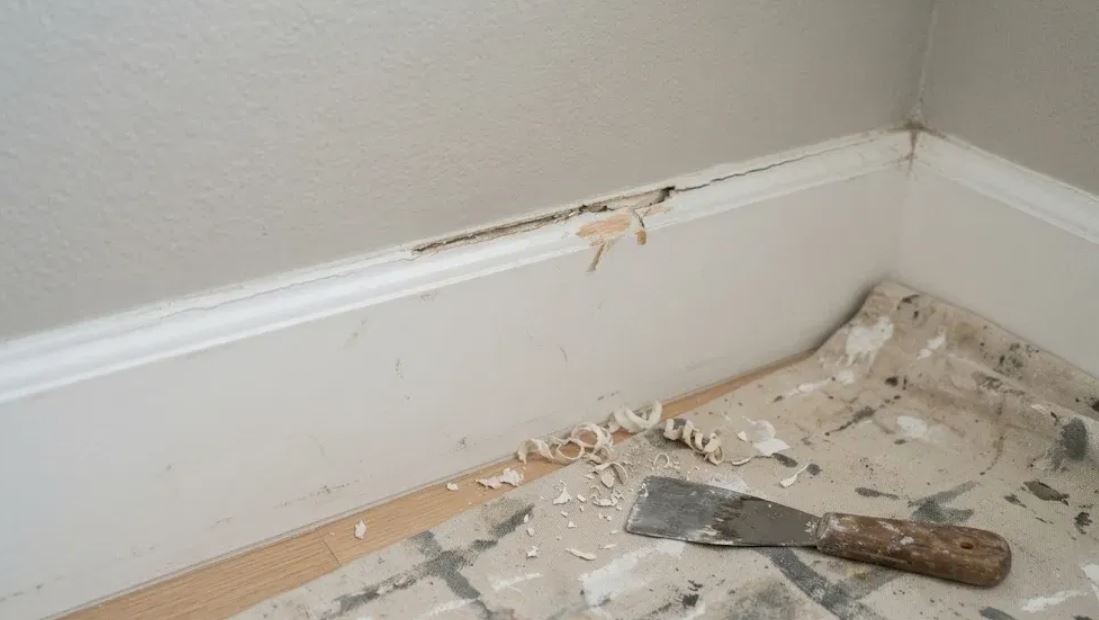
On the Little Elm job, two of us cut out the failed caulk and scraped back the loose paint with a putty knife, spot primed the bare wood, filled the joint with a flexible paintable caulk and painted two thin coats.
Can you paint over cracked paint on trim?
No, not directly. Cracks telegraph through new paint and add texture.
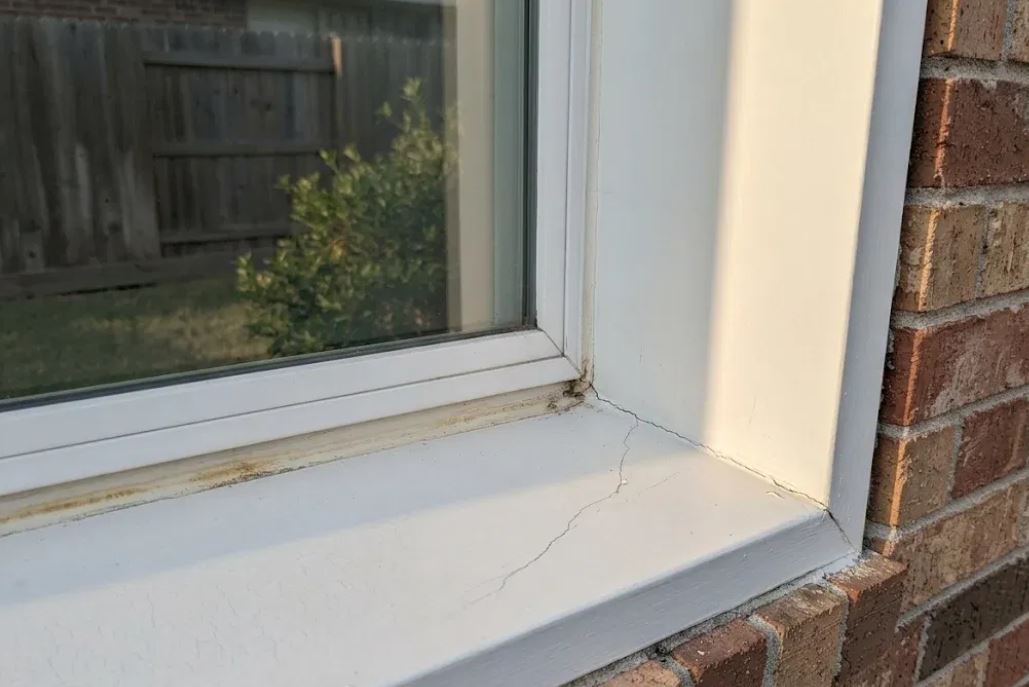
The south window I painted on a McKinney house built in the 2000s showed why. Fine cracks covered the paint in a web on the sunlit sill and trim, and the previous coat looked heavy and hard. That is the moisture, sun-and-thick-layers pattern: a hard film cannot flex as the wood heats and cools, so it crazes .
I did not paint over it, because the cracks would have shown through the new coat and kept spreading. The fix was scraping and sanding the loose areas, priming bare wood and repainting in thin coats, the exterior trim painting routine used on sun-facing trim.
How to prep trim for painting
My order is:
- Clean the surface
- Cut out failed caulk
- Scrape only what is loose
- Sand lightly
- Fill holes and cracks with a paintable filler
- Spot prime bare wood, patched spots and any glossy old finish
- Caulk the gaps
- Paint in thin coats
If moisture is behind the cracks, I fix the source before any paint goes on.
How many coats of paint for trim?
I use primer where there is bare wood, patching or a glossy old finish, then two thin coats, and I add a third only for a big color change or poor coverage.
Primer also goes on any spot where I sanded through to bare wood. Thick coats are a cause of cracking, because a skin forms before the film dries through. On sheen, trim usually takes satin or semi-gloss enamel, the same two sheens we recommend for cabinets in cabinet enamel choices.
FAQ
Does dry or cold weather crack trim paint?
It can. Wood shrinks in dry or cold spells, joints open and the paint splits along them. Some cracks close when conditions change, but I still fill the gap, because it opens again next season.
Why did my new paint crack within weeks?
Usually thick coats, damp wood, a hard layer underneath or the wrong paint over an old finish. I follow the label for timing between coats, and I check the wood for moisture before painting again.
Is stripping trim better than repainting?
When paint is failing across many layers, stripping can be the cleaner route. In a home built before 1978, I test first, and I bring in a certified lead firm if the paint is failing across the trim.
Do I need primer on trim?
On bare wood, patched spots and a glossy old finish, yes. Over sound paint that is not glossy I may skip it, and I always follow the label for the primer I use.
Should trim be a different sheen from the walls?
Usually. Trim takes a harder, shinier finish because it gets bumped and wiped, so I use satin or semi-gloss on trim and a flatter sheen on walls.
What I Check on Trim Before I Quote
Before I give a number, I press along the trim, look at where each crack sits and check the wood for moisture, so the quote covers the cause and not just the paint. You can request an estimate and I will walk the trim with you.